Advertisements

How to Track Body Recomposition Progress (Without Losing Your Mind)
Here’s a stat that honestly blew me away: according to research published in the Journal of Strength and Conditioning Research, people can simultaneously lose fat and gain muscle — but the scale might not budge for weeks. Weeks! I learned this the hard way about three years ago when I was convinced my training plan was broken because my weight stayed the same for an entire month. Turns out, I was actually making incredible progress. I just had no clue how to track body recomposition progress properly.
And that’s the thing — if you’re only stepping on a scale, you’re basically flying blind. Body recomposition is a different beast, and it demands smarter tracking methods.
Why the Scale Is a Terrible Best Friend
Look, I’m not saying throw your scale in the trash. But I am saying it lied to me for months and I believed every word. When you’re building lean muscle mass while losing body fat simultaneously, your total weight can stay frustratingly flat.
I remember stepping on the scale every Monday morning like some kind of ritual, and the number barely moved. Meanwhile, my jeans were fitting looser and my arms were visibly more defined. The scale doesn’t know the difference between a pound of muscle and a pound of fat — it just spits out a number.
So yeah, weigh yourself if you want. Just don’t let it be your only measurement tool.
Take Progress Photos (Even When You Don’t Want To)
This one’s uncomfortable, I know. Nobody loves standing in front of a camera in minimal clothing at 7 AM. But progress photos were honestly the single most useful thing I did during my recomp journey.
Advertisements
Here’s my tip: take them every two weeks, same lighting, same time of day, same angles. Front, side, and back. I made the mistake early on of snapping random photos in different bathrooms with wildly different lighting, and comparing them was basically useless.
Visual changes happen slowly, and your brain kinda adjusts to what you see in the mirror daily. Photos give you that objective before-and-after comparison that your mirror simply can’t provide. Trust me on this one.
Body Measurements Don’t Lie
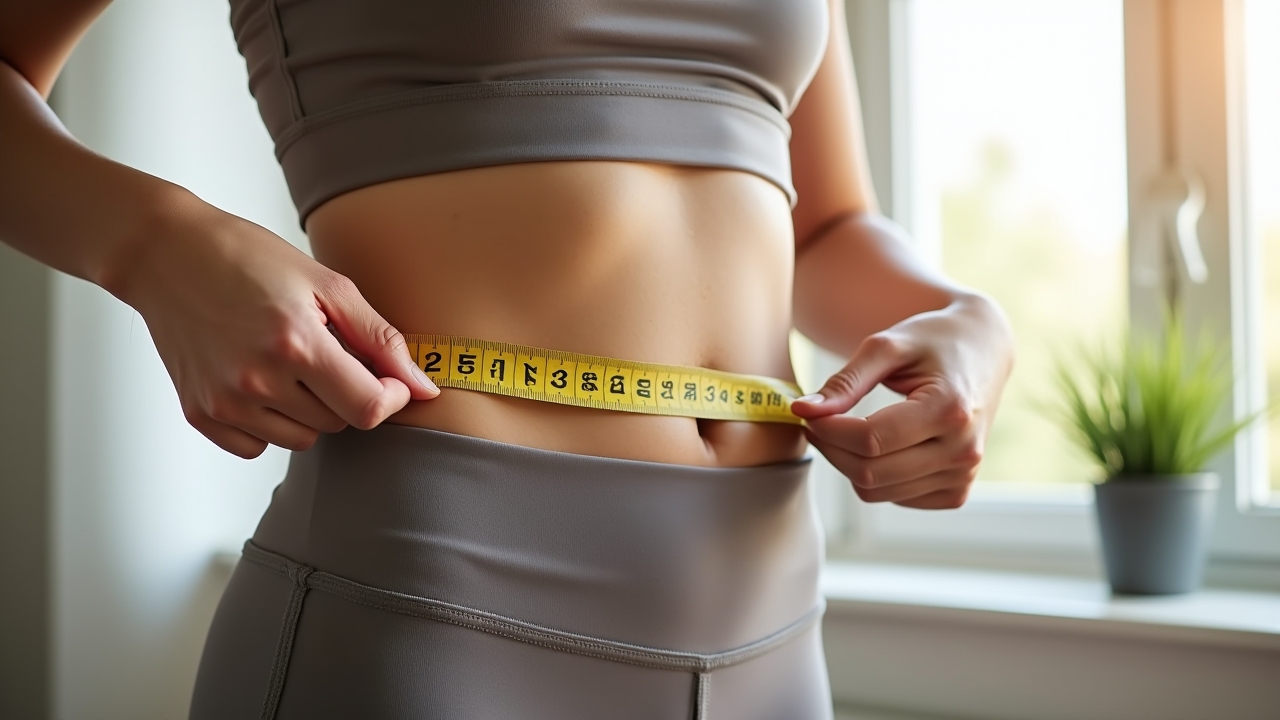
Grab a cheap fabric tape measure — like these ones on Amazon — and start tracking key areas. I measure my waist, hips, chest, arms, and thighs every two weeks.
- Waist getting smaller while shoulders stay the same or grow? That’s recomp happening.
- Thighs staying the same circumference but looking more defined? Muscle is replacing fat.
- Chest measurement holding steady while your stomach shrinks? You’re on the right track.
Write these numbers down somewhere consistent. I use a simple Google Sheet, nothing fancy. Consistency in when and how you measure matters way more than the tool you use.
Body Fat Percentage: The Gold Standard (Sort Of)
If you really want to get nerdy about it — and honestly, I recommend you do — tracking your body fat percentage is probably the most telling metric for recomposition. A DEXA scan is considered the gold standard, though it can be pricey at around $50-$150 per session.
Cheaper alternatives include skinfold calipers and bioelectrical impedance scales. Are they perfectly accurate? Nope. But they’re consistent enough to show trends over time, and trends are what we’re really after here.
I got a DEXA scan at the start and then again three months later. My weight had only dropped two pounds, but I’d lost nearly seven pounds of fat and gained about five pounds of muscle. Without that scan, I would of probably quit thinking nothing was working.
Strength Gains Tell a Story Too
Don’t overlook your training log. If your lifts are going up while your waist is going down, that’s body recomposition in action. Period.
I track my main compound lifts — squat, bench, deadlift, overhead press — and when those numbers climb even slightly, I know muscle is being built. It’s honestly one of the most motivating ways to measure progress because you feel it in real time.
The Bigger Picture
Tracking body recomposition progress isn’t about obsessing over any single metric. It’s about combining several data points — photos, measurements, body fat estimates, strength numbers — and looking at the overall trend. Be patient with yourself, because recomp is a slow game that rewards consistency over perfection.
Customize these methods to fit your lifestyle and don’t compare your timeline to anyone else’s. And hey, if you’re hungry for more practical fitness guidance, head over to the Elite Body System blog where we break down stuff like this every week. You’ve got this!